This is the fifth book I read in the year 2020.
This book was *not* initially a part of my reading plan for the year, and the way I stumbled upon it was a pure coincidence.
I asked my friend, Monika, to suggest me a good book after I finished the last wisdomous quotes from Mr. Barack Obama, and she recommended checking out her bookshelf instead of her suggesting what to read. It was a pure moment of luck as I browsed through the middle section of the book shelf and felt so happy that I got to finally see the book that was on my reading list for a couple years, but, then got buried due to other more influential and new books. Anyway, I was excited to give it a read and curious to find out what the author’s take was TO NOT GIVE A F*CK.
I must say this book didn’t live up to the expectations. Maybe, a couple of years of buildup didn’t help while reading this book. I have had heard many good stories from friends about how good and weirdly positive this book is, so, I had high expectations that I would get to read something different that I don’t live by in my life. To my dismay, most of the stuff given in the book was already a part of my lifestyle. I am not complaining here. I am just trying to say that there are many good and positive things mentioned in the book, some of which, if you follow in your life, you would definitely come out as stronger and more positive person.
Now, at the risk of sounding a big philosopher, let me jot down a few points that I think perfectly describes what this book is about.
WHAT REALLY MATTERS AT THE END
I have stressed so much on this point through these blogs and through my conversations with friends and family. Also, it was the single biggest thing that I learnt after reading The Snowball, the biography of the Oracle of Omaha.
I cannot stress this enough and again how important to know what really matters at the end of someone’s lifetime – Family and people that surround you and love you without any expectations.
All the success that you accomplish in life, all the marathons and ultramarathons that you run, all the races that you win and be the wealthiest person in the world, nothing of that helps or makes you happy if you are not surrounded by people that you love and care about you. That victory becomes so insignificant because of the absence of your loved ones at the finish line.
I had a little bit difficulty understanding this point from the author, but, as I have already read the Snowball, which has put this point directly and without any buildup, I think, I got the idea that the author was trying to mention here.
HOW TO ACCOMPLISH SOMETHING IN LIFE
This is the third biggest learning for me after reading this book.
This is where the author hit the first home run for me. While reading this book, I usually found that I was (in a weird way) talking to myself, and then suddenly the author talks about how to achieve or do something in life and in the simplest language possible.
And the thing that I liked more was his examples to show how to do something in life. His example was asking a girl that you like out on a date. It was a relatable example for me. In the past, I had been afraid to ask girls that I liked out on a date. After reading this book and understanding how to achieve that, I find it super easy now.
The author’s take on this is JUST DO IT! Don’t overthink about it, don’t spend time contemplating what might happen and what might not. By doing something only will you find out what happen, correct? Then, why are you afraid of doing things? Whatever you want, just do it and see how it goes and find out yourself.
In a single sentence – If you want to do something in life, just do it already!
IMPORTANT QUESTIONS WE SHOULD ASK OURSELVES IN DILEMMA
This is the second most important thing I learnt after reading this book.
If I had to pick the best thing about this book, it would be this topic. In this chapter, the author, very cleverly, gives you three questions that he recommends asking yourself whenever you are in a dilemma and don’t know what to do next or about it.
Many times in my life, I am faced with such a dilemma, both in the past and the present; and, I know, I will face similar situation in the future as well.
These questions go like these.
Question 1 – WHAT IF I AM WRONG?
The author recommends asking this first question when in a dilemma. By asking this question, you are sure to realize both the pros and cons of the decision you *think* is right.
For example – if a friend stopped talking to you, and you are being upset about it and thinking some conspiracy theory around it, then this is the definite question you should ask yourself – What if I am wrong? What if whatever I am thinking about a friend of mine is wrong? By answering this question, you will soon realize the consequences of either talking or not talking to that friend of yours.
Question 2 – WHAT WOULD IT MEAN IF I AM WRONG?
This is the second crucial question you should ask yourself. We will take the same example as I mentioned above. After answering the first question, let us think more about the second question. Does it matter whether I am right or wrong here? If it doesn’t, then we are good; but, if it does, then what would it mean to be the wrong person in this conversation. You can figure out by answering this question whether you would like to continue talking to your friend or not.
Question 3 – WOULD BEING WRONG CREATE BETTER/WORSE SITUATION FOR MYSELF AND/OR THE PERSON INVOLVED?
And this is where things really start unfolding.
The third question is most important and gives away the decision that you are going to take. By answering the third question, you can definitely tell what your final decision is going to be. If talking to your friend (which means you are wrong – the answer to your first question), betters the situation, then you will have something which will last a lifetime. But, if you were not wrong and being wrong worsen the situation, then it is better to let go of things/people/feelings.
I know that I sound so plain and rude while saying this, but, that’s what one of the learnings this book has given to me and is one of the partial reasons why this author loves Russia – because Russian people are transparent and quite vocal about their feelings regarding things and people.
THE LAST CHAPTER OF DEATH
And that brings us to the last chapter of this book.
This chapter moved me personally a lot and made me think about the only inevitable thing in this world and in our lifetime – DEATH.
Author starts this chapter by stating the above. The only thing which is inevitable for every living thing in this world – Death. Death is what makes us living and there is no way to escape that; which is both true and profound.
The author then goes on to give example of one of the most influential philosopher of all time – Ernest Becker. Back in 1970s, when Mr. Becker was diagnosed with some kind of cancer and when he was going through the therapy sessions, he wrote one of the greatest books ever on the topic of philosophy – The Denial of Death. The author says there are two important takeaways from this book.
The first one is that the human beings represent two things – one physical form and the other one is soul. This is true in so many ways. People, during their lifetime, are mostly concerned about their physical body, without looking inside how their soul looks like. The Author recommends taking care of your soul the same way you take care of the physical body.
The second and more important point that the author makes that Mr. Becker mentions this entire world is crippled by the idea of the IMMORTALITY PROJECT. The way Mr. Becker explains it is even better. He mentioned that the entire human race is worried about their name and their legacy once they leave this world; What they forget to notice is that it doesn’t matter what happens once they depart from this world, so the Immortality Project is not the book but the curse to the human race. And, we should focus more on accepting the sad reality of death.
I agree with whatever he mentioned, but the one thing I strongly disagree with is we shouldn’t do anything to improve or make this world a better place. That’s why it was hard for me to digest the second point of this chapter, but, respected him as he is considered one of the greatest philosophers ever.
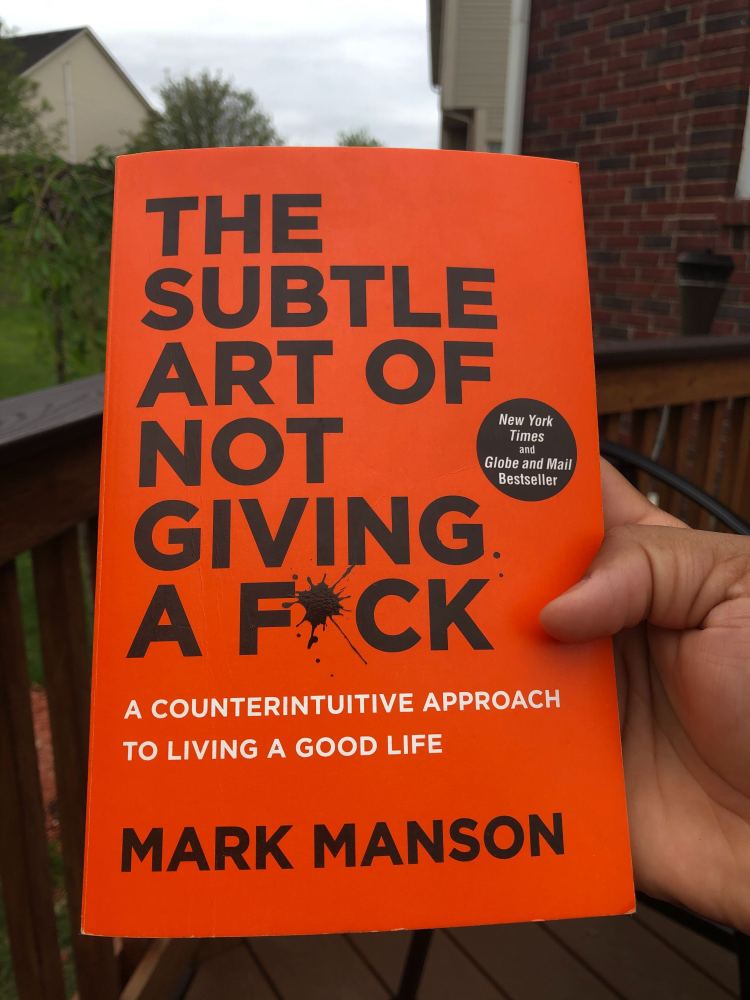
This book gets both boring and exciting at the same time; partly because I have been following this rule in my life for quite some time now and never seems to get enough of it. When I was looking for the next book to read, my friend, Monika, told me she has a copy of it, so, I didn’t want to pass on the opportunity to read this book as it was on my reading list for more than a year! It is worth read and totally depends on your taste how you take it. I loved it and didn’t turn out to be a waste of time for me.
In conclusion, it was a good and thought provoking book.
 stochasticity